
2026/2027 olive harvest
This is the story of the bottle in your hands. The olives were picked on the hills of Loppiano between 10 and 14 November 2026, and on 15 November they became oil. Here you can follow, step by step, when and how it happened.
Its identity card
- Oil Oro dei Templari — extra virgin olive oil
- Vintage 2026/2027 olive harvest
- Origin The olive grove of La Magione di Loppiano, Figline e Incisa Valdarno (Florence)
- Harvest 10 to 14 November 2026
- Milling 15 November 2026
- Olive mill Frantoio Masaccio, Reggello (FI)
- Processing only our own olives, milled as a separate batch
- Filtering yes, before bottling
- Packaging glass bottles, filled at the mill
- Analysis laboratory report on its way
Buy this vintage’s oil: a 0.5 l bottle for €15 or a 5 l tin for €100, shipped worldwide.
From the tree to the bottle
I
The harvest
10 – 14 November 2026
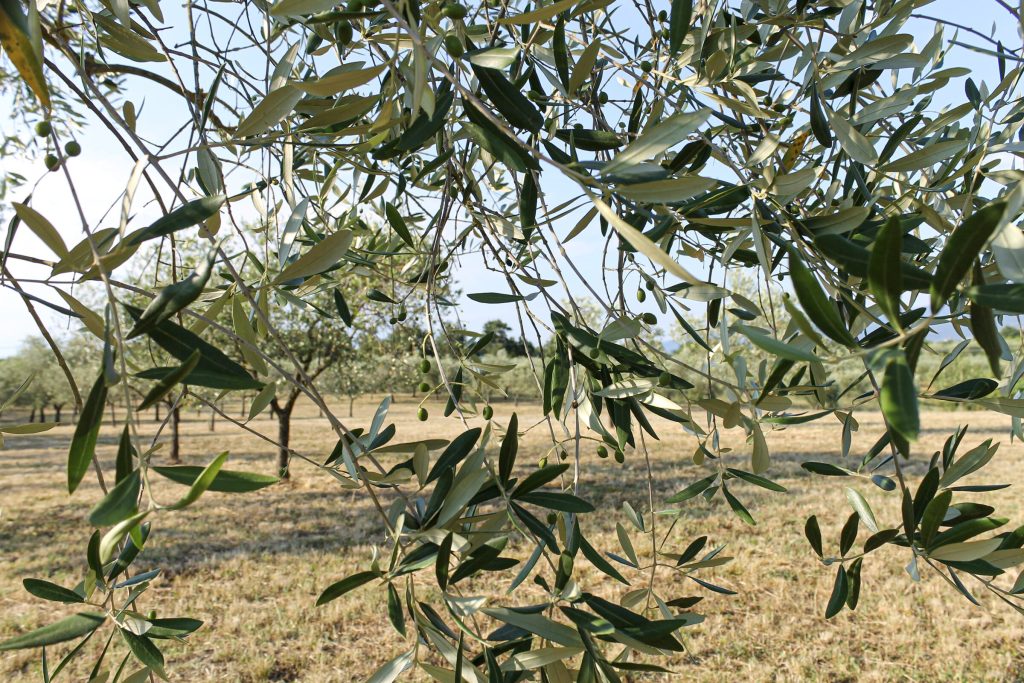
For five days the olives were picked from the trees of the Magione grove, on the hills of Loppiano in the Upper Valdarno.
We picked them in mid-November, when the fruit starts to change colour: that is when the oil comes out at its most fragrant, with the green, bold character of new oil.
II
Arrival at the mill
15 November 2026
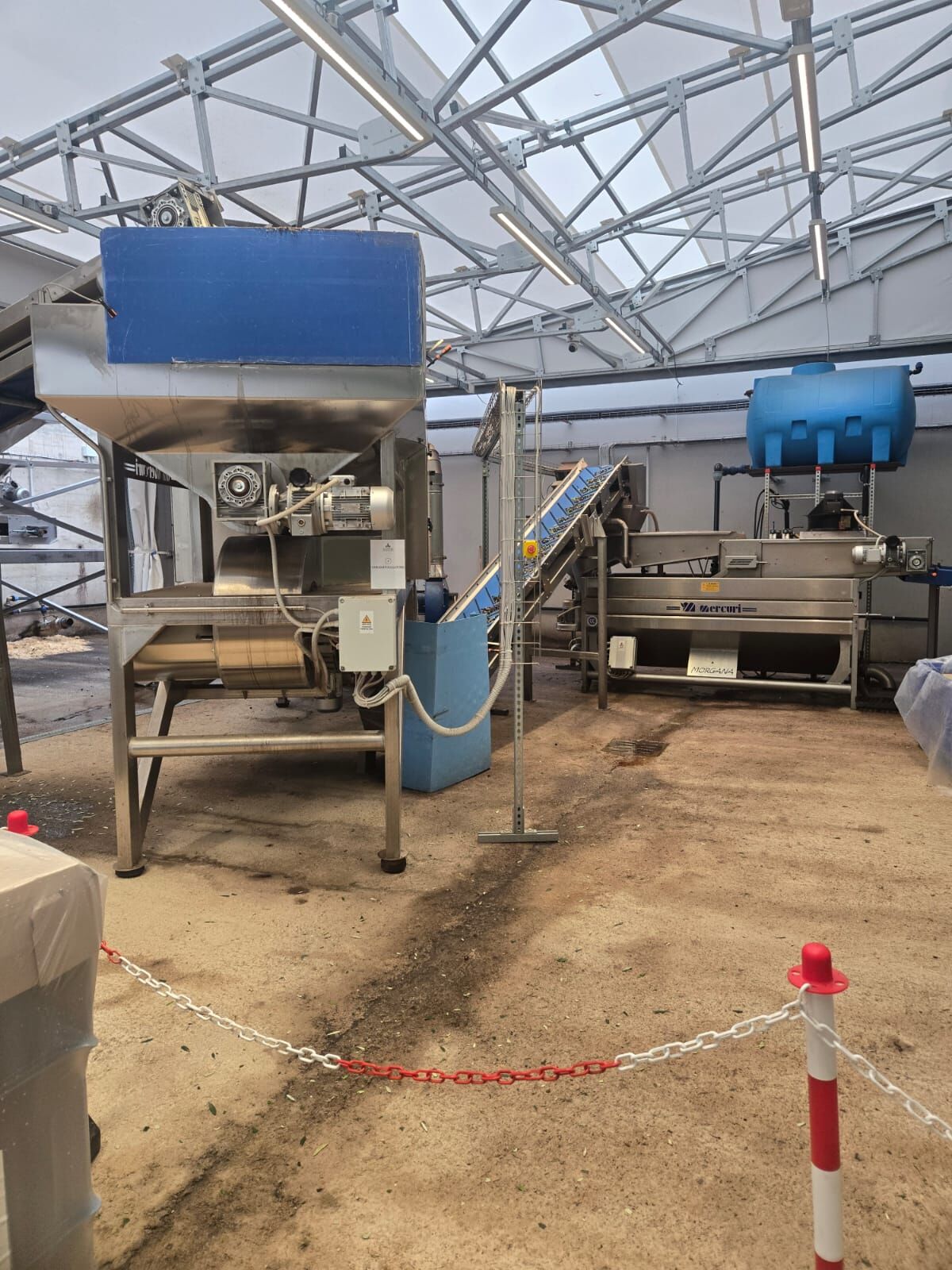
The day after the last picking, the olives arrived at Frantoio Masaccio in Reggello, a few kilometres from the farm.
First the olives are separated from the leaves and washed in water, so they go into processing clean, with no soil or twigs.
III
Crushing and malaxing
15 November 2026
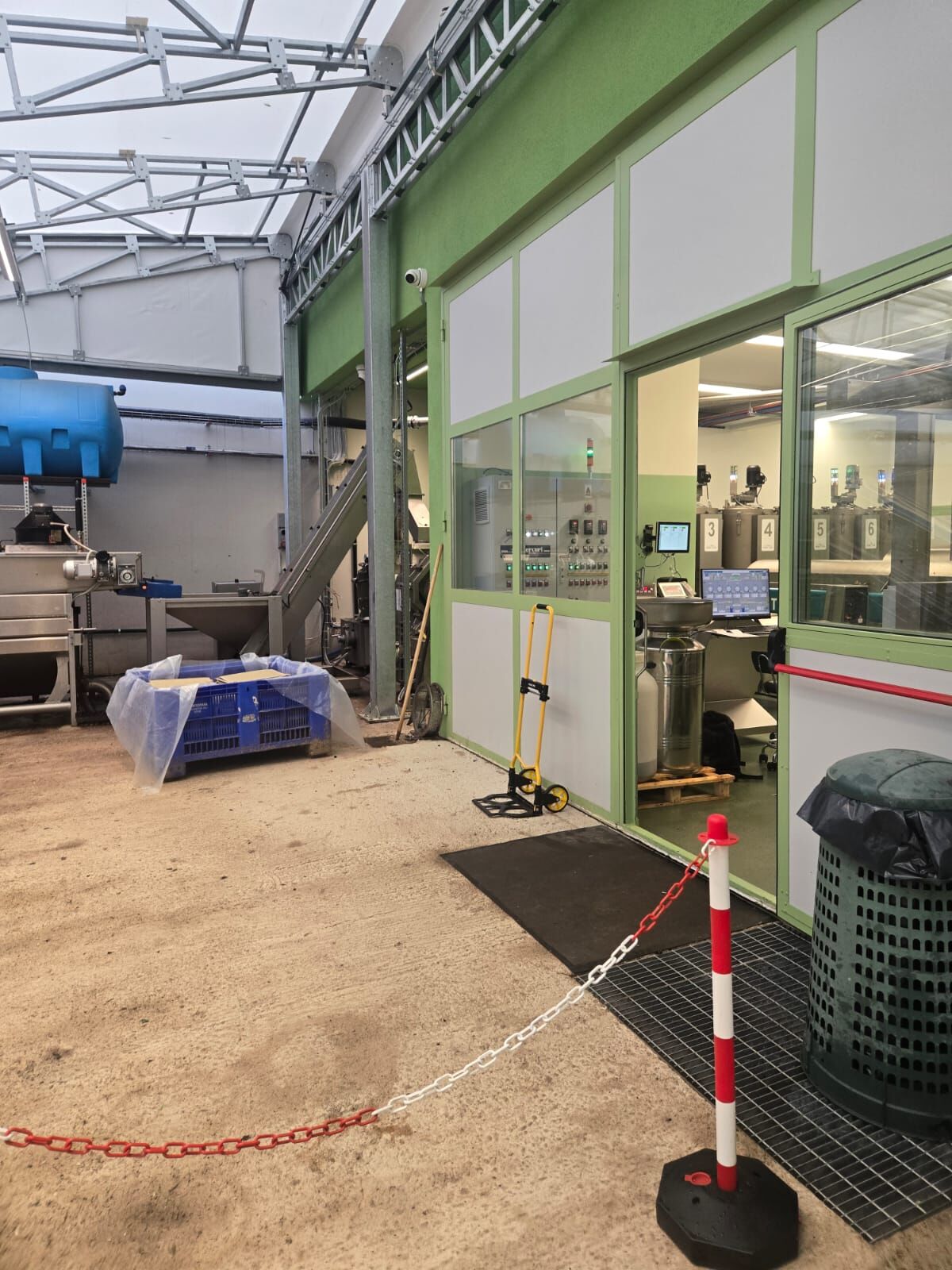
The olives are crushed, stones and all, into a paste. The paste then rests and is slowly stirred in the malaxers: this is the stage where the tiny droplets of oil join together.
Our olives were processed as a separate batch, never mixed with other growers’ olives: the oil that comes out is theirs alone.
IV
Extraction
15 November 2026
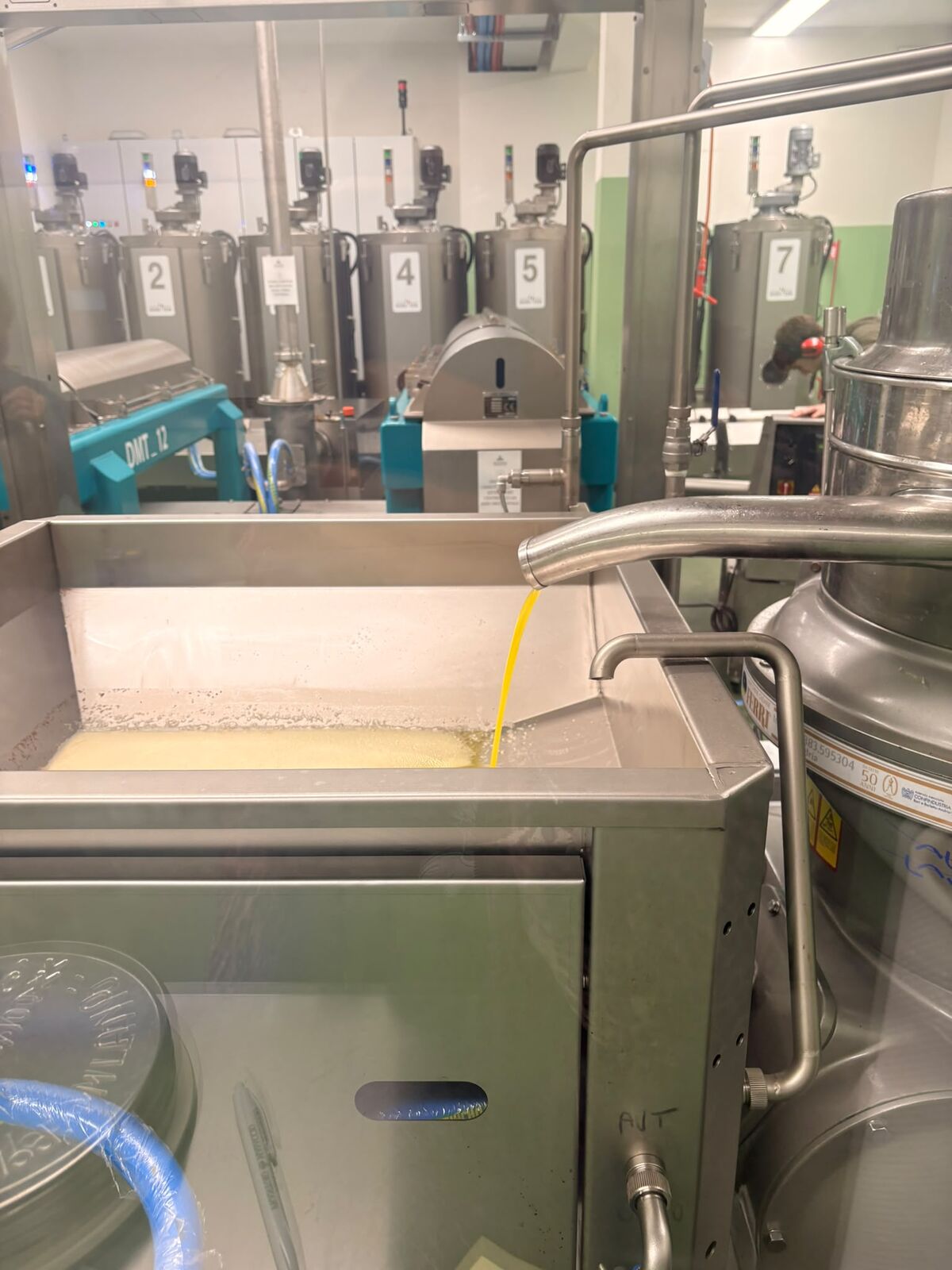
The oil is separated from the paste by centrifuge, then a separator frees it from the vegetation water. This is when you see it for the first time: green, cloudy, with that scent of cut grass that lasts only a few weeks.
V
Filtering and bottling
15 November 2026
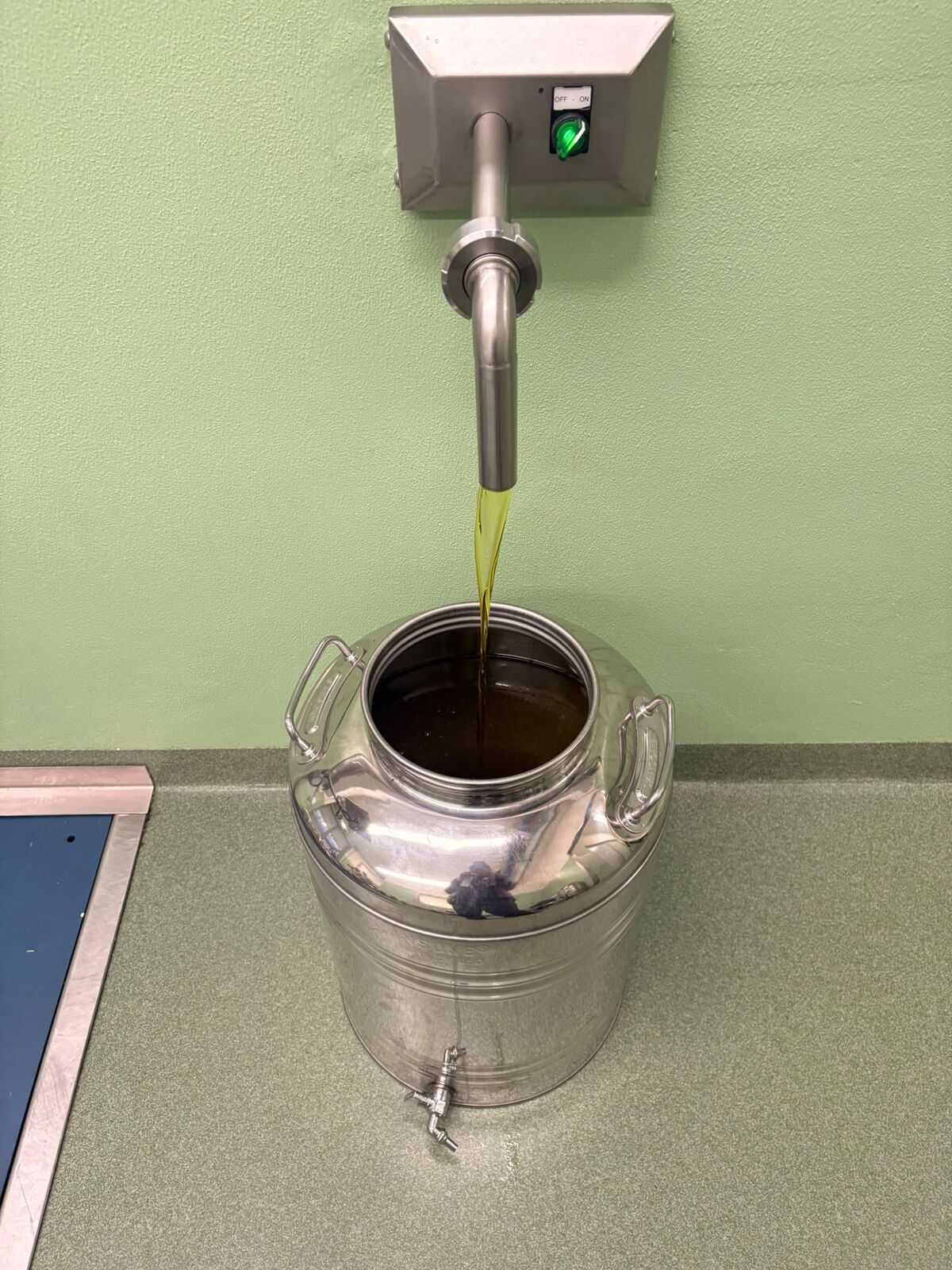
The oil was collected in steel drums bearing our name and then filtered: filtering removes the particles and water left in suspension which, settling at the bottom over the months, can spoil its taste. This way it keeps better over time, without changing its character.
It was then bottled right at the mill, in glass bottles: no stops in other containers, no extra transfers. Glass gives off no smells or flavours and keeps the oil just as it came out.
Laboratory analysis
Report on its way
A sample of this oil has been sent to an analytical laboratory to be tested and certified. Quality matters to us and we want to make a difference: we believe that publishing a full analysis is the most honest way to stand behind what is in the bottle, and to give those who use it the certainty of knowing what they are putting on the table.
As soon as the laboratory sends us the report, we will publish it here in full, with every value measured. If you scanned the code on the bottle, check back in a few weeks: you will find it on this same page.
At the mill, 15 November
Knowing where your food comes from, who picked it and when: to us, that is part of the flavour.